Grain-Boundary Defects and Machine-Learning Force Fields
At York, I work on defect dynamics at grain boundaries in hybrid semiconductors and on developing machine-learning force fields for realistic, large-scale simulations.
Computational materials science · Hybrid semiconductors
I develop quantum-mechanical and data-driven simulations to understand defects, phase stability, crystallization, and optoelectronic response in hybrid semiconductors and metal-halide perovskites.
My research connects atomic-scale mechanisms to materials and device performance. I use first-principles theory, semiempirical electronic-structure methods, molecular dynamics, and emerging machine-learning potentials to model hybrid semiconductor materials across length and time scales that are difficult to access experimentally.
At York, I am focusing on defect dynamics at grain boundaries in hybrid semiconductors and on developing machine-learning force fields that can extend accurate simulations to larger, more realistic structures.
My work combines electronic-structure theory, atomistic dynamics, and data-driven simulation to understand hybrid semiconductors and metal-halide perovskites across structure, stability, and optoelectronic response.

At York, I work on defect dynamics at grain boundaries in hybrid semiconductors and on developing machine-learning force fields for realistic, large-scale simulations.

I study the mechanisms that control phase stability, crystallization, solvent effects, and morphology in metal-halide perovskites using DFT and ab initio molecular dynamics.

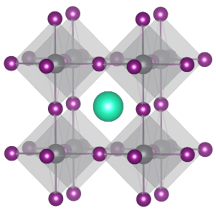
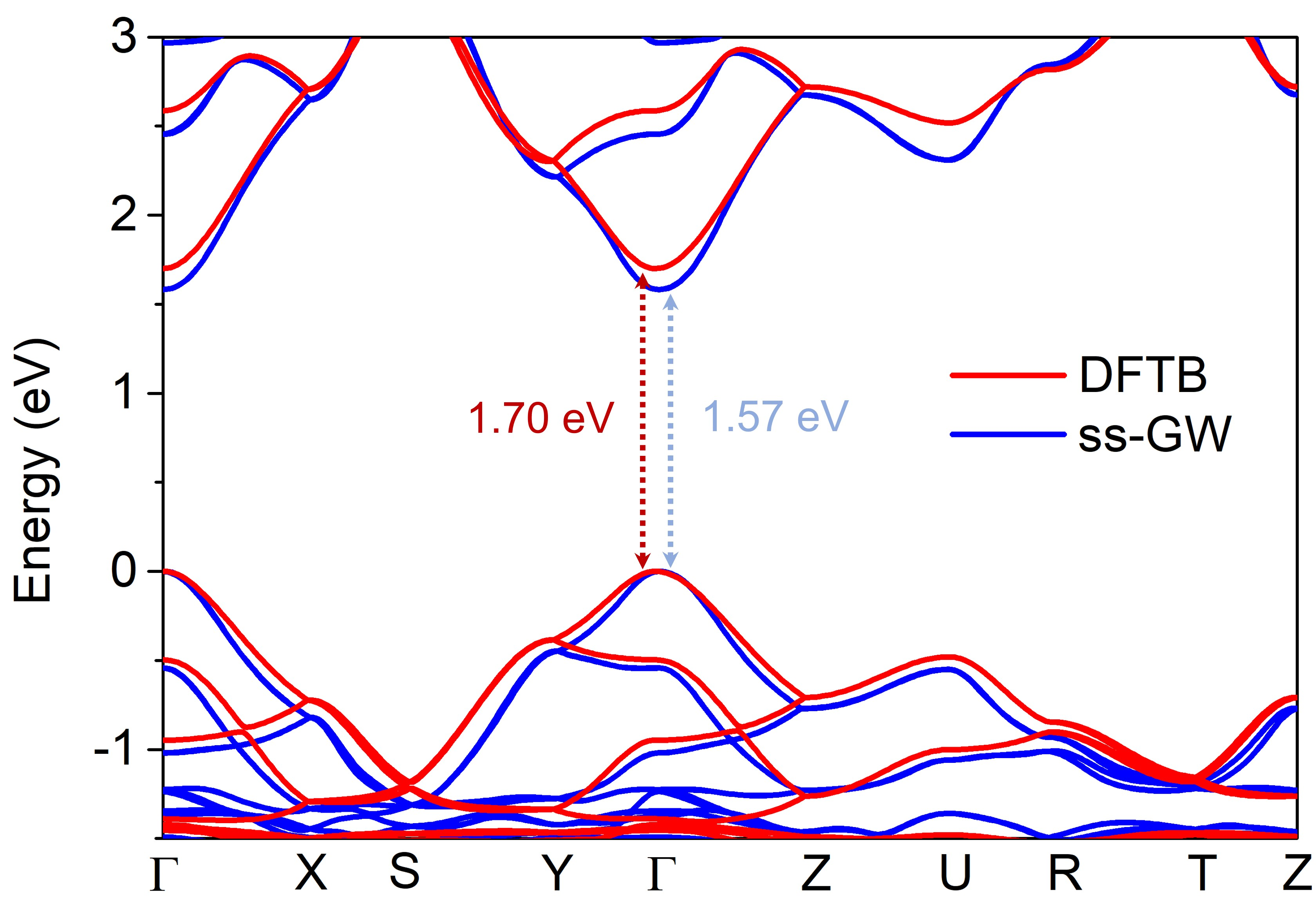
A major direction is the development and validation of DFTB parameters for large periodic and non-periodic perovskite systems, including 3D, 2D, and heterostructured iodide perovskites.
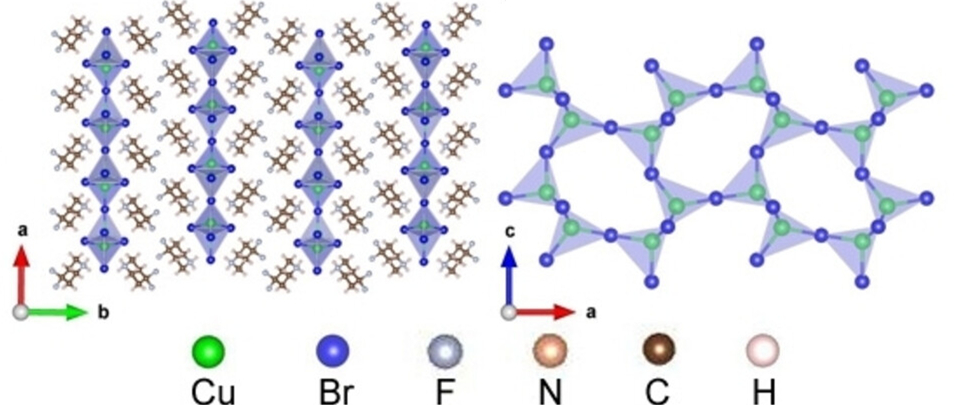
I use atomistic modelling to understand layered perovskites, quantum dots, dopants, surfaces, interfaces, and device-relevant behavior for photovoltaics and light-emitting applications.
Representative publications from the latest CV are shown below. For the complete and most current publication record, please see the publications page and Google Scholar.
Jianing Duan, Junke Jiang, Unsoo Kim, Jong Woo Lee, Yingguo Yang, Mansoo Choi, Zhaoxin Wu, Jun Xi
ACS Energy Letters, 2026, 11(2), 1714-1723 · DOI
Mengqi Geng, Junke Jiang, Xinrui Ma, Jialiang Li, Ke Wang, Le Jiang, Dan Lu, Bin Li, Yu Gu, Tingting Xu
ACS Applied Materials & Interfaces, 2025, 17(47), 64645-64654 · DOI
J. Jiang, T. van der Heide, S. Thébaud, C. R. Lien-Medrano, A. Fihey, L. Pedesseau, C. Quarti, M. Zacharias, G. Volonakis, M. Kepenekian, B. Aradi, M. A. Sentef, J. Even, C. Katan
Physical Review Materials, 2025, 9, 023803 · DOI
Develops efficient DFTB parameters for electronic-structure prediction in 3D and 2D iodide perovskites.
J. Jiang#, J. You#, S. (Frank) Liu, J. Xi
ACS Energy Letters, 2024, 9, 17-29 · DOI
J. Xi#, J. Jiang#, H. Duim, L. Chen, J. You, G. Portale, S. (Frank) Liu, S. Tao, M. A. Loi
Advanced Materials, 2023, 35, 2302896 · DOI
# Equal contribution. Citation counts and indices are intentionally not repeated here so they remain current through Google Scholar.
Joined the School of Physics, Engineering and Technology at the University of York as a Research Associate.
Co-first-author paper on device-operando photostability of quasi-2D Ruddlesden-Popper perovskites published in ACS Energy Letters.
Published DFTB parameters for electronic-structure prediction of iodide perovskites and heterostructures in Physical Review Materials.
Presented work at MATSUS, E-MRS, and French national meetings on metal-halide perovskites and nanomaterials for energy.
I welcome conversations on computational materials science, hybrid semiconductors, perovskite stability, DFTB methods, and machine-learning potentials.
School of Physics, Engineering and Technology
University of York, Heslington, York YO10 5DD, United Kingdom
Email: junke.jiang@york.ac.uk